- Neil's Newsletter
- Posts
- Your IMPORTANT Weekly Briefing: (16th January 2026)
Your IMPORTANT Weekly Briefing: (16th January 2026)
The Neil McCoy-Ward Newsletter

Opening Note…
Welcome back to another week of madness! I honestly couldn’t believe my eyes yesterday… picture the scene:
There I was, with my wife, sat in a nice restaurant in Bangkok, just watching the World go by, taking in the sights and smells. Eating some tasty Thai food, drinking some lovely drinks. Listening to the various conversations going on around me.
Then my wife says: “Oh wow! I know you said you’re not streaming tonight but I think you should really warn people about this!” She then handed me her phone and it read:
BREAKING NEWS! Veterans Aged 65 Told To Prepare For WAR!
Source: ‘The Guardian’
I said to Kristin: “Yes, you’re right, I need to go back right away”
And I’m glad I did, over 120,000 views and 5,000 comments in the first 12 hours agreed with my exact concerns. The current UK Government needs to be replaced. They have stopped listening to the will of the people.
Kier Starmer now has a 10% approval rating, and over 1 million people signed the petition (before they closed it down!) calling for a general election. But they refused.
I’m furious. And so should you be if you believe in democracy. The will of the people always comes first, not the will of one man who has a 10% approval rating. That means that 90% disapprove of him.
A 65 year old man is of no use on the battlefield. Any idiot knows this. Which makes me start asking other questions… with a bankrupt healthcare service (NHS), a bankrupt pension service, and a Government constantly dealing with protests from this older age group (oh, who vote against them too)…
Wouldn’t it be perfect if all of these problems could be solved with one simple policy passed into law? A law that if you don’t follow, you are subject to the strictest of AWOL/desertion penalties under not standard UK, but military wartime law.
Hmmm…
Let's break down the latest...
Table of Contents
1. Weekly Spotlight
Trump Turns Up the Heat on Greenland
It’s been another major news week with so much going on, and yet I kept thinking, wait, are we really talking about Greenland again?
But yes, Greenland appeared back in the headlines because Donald Trump has doubled down. He said the United States should control Greenland.
Trump has said it’s a national security issue and tied it to America’s position in the Arctic. He even claimed Greenland is vital for a new missile defence project he calls the “Golden Dome,” which is his way of saying ‘this is about the future of US defence’. Of course, Denmark and Greenland pushed back hard. The message from Greenland’s leaders was the same as it was before: we are not for sale. Denmark backed them up and made it clear it sees this as a direct challenge.
What makes people uneasy is how the tone has shifted from “wouldn’t it be nice” to “we need it.” And Trump really did lean into that language again after this week’s talks, repeating “we need Greenland” and linking it right back to national security and his Golden Dome idea.
US officials have been saying they are not planning a military operation. But the whole conversation has picked up in that direction anyway.
Part of the reason is the way this week’s meeting in Washington ended. Denmark and Greenland said they didn’t manage to move the US ‘off its position’. They agreed to set up a working group that should meet within weeks. Having given it a name like a working group pretty much tells us nothing will happen.
And unsurprisingly, since that meeting, things have not really cooled down. European troops have actually started arriving in Greenland in a Denmark-led effort with several allied countries involved. The White House has also been pretty blunt that this won’t change Trump’s goal.
Denmark is also responding on the ground. They have been talking openly about Arctic security and moving toward a bigger, more permanent presence in and around Greenland, with exercises running through 2026 and more help from allies.
Sweden even sent officers to Greenland this week to join the effort. In Washington, some members of Congress have been floating ways to block any attempt to take Greenland by force. A bipartisan group of US senators introduced a bill that would bar funding for any move to occupy or annex Greenland, and a House member introduced a similar effort to cut off federal money for any kind of seizure.
If you only hear the security argument, this whole situation sounds abstract and unreasonable. As if this is just about bases and big-power posturing. But the part that explains why this keeps coming back is what’s under the ground.
Greenland is sitting on minerals that the modern economy is suddenly desperate for. These are the materials that end up inside data centres, electronics, and weapons systems. Rare earth elements are the ones people talk about the most because they are used to make the strong magnets that go into things like advanced motors and military hardware.
So when Trump talks about Greenland, the “minerals angle” is really what he is getting at. Control or influence over Greenland could mean influence over future supply chains for these critical materials for the US.
And there’s another reason this matters right now: The US and Europe have been trying to reduce their reliance on China for rare earths and other key inputs. If Greenland can eventually produce more of these materials, it could become one of the alternative sources that reshape that whole balance.
There is a catch, though. Having minerals in the ground is not the same thing as getting them into factories. Greenland is remote. The weather is harsh. Infrastructure is limited. Mining projects take years, cost a fortune, and run straight into local politics about the environment and what kind of development Greenland actually wants.
And besides, who wants to go to Greenland, freeze their butt off and do this work?
2. Quick Takes
Here are the other top stories shaping the week:
UK Pulls Diplomats As US Edges Closer To Strike On Iran
Britain has pulled its ambassador and staff out of Tehran and moved troops out of the US base in Qatar as US officials tell allies a strike on Iran is STILL likely, even while Donald Trump publicly plays down imminent action. Iran has shut its airspace, promised televised mass trials for protesters, kept most of the country offline, and sent security forces door to door hunting Starlink kits as it tries to crush unrest that rights groups say has killed thousands. The regime is staging large funerals for its “martyrs”, threatening US bases with missile strikes, and clashing with Kurdish fighters it says are slipping across the Iraqi border to exploit the chaos. Western governments are warning citizens to leave Iran and avoid Israel, airlines are cancelling routes, and any US targeting of Iran’s security forces or even Khamenei himself risks spiralling into a much wider regional war.
Trump Threatens 25% Tariff On Any Country Trading With Iran
Donald Trump has declared that any country doing business with Iran will face a 25% tariff on all its exports to the US, saying the move is “effective immediately” in a Truth Social post. The threat is aimed at further isolating Iran as it faces large anti-government protests and a harsh crackdown. The new tariff move lands just as the Supreme Court is preparing to rule on whether some of his earlier sweeping tariffs, imposed under emergency economic powers, are even legal, and the White House is refusing to spell out the legal basis this time.
Senate Blocks Limits On Trump’s Venezuela War Powers
The US Senate voted by 51–50 to stop a move that would have made it harder for Donald Trump to keep using the military in Venezuela, with Vice President JD Vance breaking the tie. Republican senators Josh Hawley and Todd Young changed sides at the last minute after heavy pressure from Trump and private assurances that there would be no ground invasion or long campaign. They said they were swayed by promises from Secretary of State Marco Rubio to consult Congress before any big new operation, plus a Justice Department memo saying there is no long-term war plan on the table.
Machado Gifts Her Nobel Peace Medal to Trump After Maduro’s Ouster
Venezuelan opposition leader María Corina Machado, who won the 2025 Nobel Peace Prize, has handed her gold medal to President Donald Trump to thank him for the U.S. military raid that removed Nicolás Maduro on 3 January. She says the gift honours Trump’s role in “freeing” Venezuela and links it to historic exchanges between revolutionary figures. The Nobel Institute was quick to respond, saying the award can’t be transferred to President Trump! Trump, who has repeatedly argued he deserves multiple Nobel prizes, now physically holds a peace medal while still backing Maduro’s former vice president Delcy Rodríguez to run Venezuela during a slow-moving “transition.”
US Pauses Immigrant Visas From 75 Countries
The US government says it will pause immigrant visas from 75 countries from 21 January, including Iran, Iraq, Russia, Nigeria, Brazil and many others. Officials say they are using existing rules to block people they think could become a “public charge”, meaning they might need US welfare or other public benefits. The State Department says consular officers will refuse visas while they review how people are screened and checked.
Newsom Scrambles To Stop California Billionaire Wealth Tax
California Governor Gavin Newsom is moving aggressively to block a proposed one-time 5% wealth tax on residents worth over $1 billion, after a string of high-profile billionaires said they were leaving the state. The measure, pushed by the SEIU-United Healthcare Workers West union, would be retroactive for anyone living in California as of January 1 and is pitched as a way to plug federal cuts to healthcare and food aid under Trump. Newsom and the state’s Department of Finance warn it would trigger capital flight, shrinking long-term tax revenues even if it brings in tens of billions upfront. Tech founders and business leaders, including Democratic donor Reid Hoffman, are lining up against the plan, saying it would punish illiquid stock and drive investment away. Backers are now gathering nearly 900,000 signatures to get the tax on the ballot, setting up a major clash between unions, billionaires and the governor. - It’s a neat illustration of the limits of “tax the rich” politics in the 4th most liberal state.
South Korea Prosecutors Seek Death Penalty For Ex-President Yoon
South Korea’s special prosecutor has asked a Seoul court to sentence former president Yoon Suk-yeol to death for leading a failed attempt to impose martial law in December 2024. Yoon is accused of ordering troops and police to block the National Assembly so lawmakers could not overturn his decree, an act prosecutors describe as an insurrection driven by a desire for long-term rule. He was impeached soon after the move collapsed within hours and has been on trial while in custody. The charge of leading a rebellion allows for the death penalty under South Korean law, even though the country hasn’t carried out an execution since 1997, and past military-era leaders saw their own death sentences reduced and later pardoned. Yikes.
Labour Drops Mandatory Digital ID For Workers After Backlash
Labour has ditched plans to force workers to use a compulsory digital ID to prove their right to work, even though ministers had previously sold it as central to tackling illegal immigration. The scheme, due from 2029, will still go ahead but on a voluntary basis at first, after a huge public backlash, plunging poll numbers and an online petition that drew nearly 3 million signatures. Inside government, there are cost concerns too, with the Treasury refusing to fully fund the £1.8bn project and departments being told to find savings to pay for it. Ministers now stress there will be “mandatory digital checks” for the right to work at some point, but say that does not mean everyone must carry a digital ID card, and promise a full public consultation. - I watched the Commons debate about this, and the victory is not as big as many think… Starmer said he is still pushing ahead with Digital ID, just that it won’t be as broad as was originally proposed.
UK Video Game Fuels New Row
The UK government is backing a “Pathways” video game for 11-18-year-olds, funded through the Prevent counter-terrorism programme, to teach young people how online content can lead to extremism. In the game, a teen character is nudged away from his views about illegal immigration. British identity and veterans are portrayed as stepping stones toward far-right groups, extremism, and racism. Supporters say it builds media literacy and helps stop radicalisation before it turns violent, claiming ‘Prevent’ has steered thousands away from dangerous ideologies. - I say it’s just more communist propaganda being pushed through the school system.
German Business Bankruptcies Surge As China Pressure Grows
Germany has just recorded its highest number of company bankruptcies in 20 years, with 17,604 insolvencies in 2025, meaning around 48 firms went under every day. The pain worsened at the end of the year, with December insolvencies 75% higher than pre-pandemic levels, hitting sectors like hospitality, construction and real estate especially hard after interest rate rises. Medium-sized firms and even bigger companies with more than €10 million in annual sales are going bust in growing numbers, and experts don’t expect a turnaround in 2026. Chancellor Friedrich Merz has warned that parts of the economy are in a “very critical state”, while German industry, especially carmakers, faces fierce competition from China. France is also feeling the pressure, with Emmanuel Macron warning European industry faces a “life or death” moment and hinting at possible tariffs if China doesn’t ease off its export onslaught.
NEIL’S TAKEAWAYS:
In The United States:
When traders think U.S. action is imminent, like what we saw with Iran, you see a fast jump in oil and safe-haven hedges; but when Washington signals hesitation, that risk premium can disappear just as quickly.
What’s driving the hesitation is the part markets don’t like to price: the “day after” problem. The White House message coming through is that any action would need to be decisive and not turn into a long, messy conflict, but advisers can’t promise a quick regime collapse or an easy containment of Iran’s response. That gap between “swift blow” and “uncontrolled escalation” is exactly why you get these sudden spikes and air pockets in pricing.
Prepare: When prices swing like this, it’s easy to get dragged into speculation and end up losing money. The markets become like gambling, and the house always wins.
Across Europe:
European defence names caught a strong bid, and the defence-heavy part of the market became one of the clearest “where to hide” trades when headlines suggested the U.S. might push harder on Greenland.
What’s interesting is that the broader European market hasn’t melted down on this. The STOXX 600 has been flirting with record levels even as the Greenland story happens, which says investors see this as a risk premium and a sector rotation, not an immediate hit to growth. On the days the story flared, you tended to see more defensive leadership (utilities, healthcare) and more choppy trading rather than a clean “sell Europe” movement.
Prepare: Watch whether this stays a defence-led risk premium story or turns into a trade-policy story. If EU–U.S. tensions start showing up as postponed deals, tariff talk, or retaliation language, that’s when it can spread from a narrow sector move into broader confidence and investment decisions across Europe.
On the Global Stage:
The World Bank’s new outlook leans towards global growth being broadly steady around the mid-2% range into 2027, but the bigger point they make is that the world is settling into a slower decade overall, with a widening gap between richer and poorer countries.
Then there’s China, a record-scale surplus and export strength outside the U.S., which keeps global goods disinflation pressure on going in some categories, but it also raises the odds of more trade friction, especially if geopolitics start spilling into tariff threats and secondary sanctions. Both of which have been floating around.
Prepare: If China’s export strength keeps pushing prices down in some goods, that helps inflation on paper, but leads to a bigger risk in the form of policy response to it, where tariffs or secondary sanctions could raise costs and disrupt flows quickly. Watch for concrete moves (tariff proposals, sanctions expansion, enforcement language), because that’s what turns a quiet growth outlook into a bumpier one.
3. Emerging Markets Poised To Power 2026 Global Growth
The IMF’s latest forecasts for 2026 show India out in front with 6.2% growth, followed by Indonesia at 4.9% and China at 4.2%, making emerging markets the main engine of global growth. Overall world growth is put at 3.1%, but most advanced G20 economies fall short of that, with the EU at 1.4% and the US and Australia doing only slightly better at 2.1%. Although the IMF is no fan of Trump, so I wouldn’t be surprised if they have downplayed US GDP. Core European economies like Germany, France, and Italy are stuck below 1%, while Japan barely grows at all at 0.6%, held back by an ageing population and weak demand. The numbers point to a widening gap where big emerging economies, especially India, keep gaining economic weight as much of the rich world settles into slow, almost stagnant growth.
But overall, this is what I’ve been saying in my monthly macro video on Patreon for years now: if you want strong growth, look outside the West. Explosive growth is going to be in the developing nations as we move forward.

4. Market Overview
S&P 500 (U.S.)
In the U.S., the S&P 500 was roughly flat this week. Shares started strong but faded as investors tried to make sense of mixed company results and the outlook for U.S. interest rates. Strength in chip stocks mid-week helped keep the overall move small.
FTSE 100 (UK)
In the UK, the FTSE 100 was up modestly this week. The market was helped by encouraging economic updates and steady gains in several of the index’s biggest companies, which outweighed weakness in some more UK-focused names.
S&P/TSX Composite (Canada)
In Canada, the TSX was up. Gains were led by financials and resource stocks, supported by a slightly better tone in global markets. Late-week softness in some commodities slowed things down, but the index still finished higher.
ASX 200 (Australia)
In Australia, the ASX 200 was up for the week. Most of the lift came from banks and large defensives, with additional support from commodity-linked stocks. Overall, it was a steady week rather than a big move.
🇺🇸 United States – S&P 500
High: 6,985.09
Low: 6,887.07
🇬🇧 UK - FTSE 100
High: 10,256.91
Low: 10,099.77
🇨🇦 Canada – TSX Composite
High: 33,093.76
Low: 32,709.33
🇦🇺 Australia – ASX 200
High: 8908.70
Low: 8733.60

Cryptocurrency:
Bitcoin (BTC): 5.4%
Ethereum (ETH): 6.6%
Tether (USDT): 0.1%
BNB (BNB): 5.2%
XRP (XRP): -1.8%
Solana (SOL): 3.1%
USDC (USDC): 0.0%
Lido Staked Ether (STETH): 6.6%
TRON (TRX): 5.1%
Dogecoin (DOGE): -1.5%

Metals Market:
Gold–Silver Ratio: ~50:1. The ratio moved lower this week because silver generally outperformed gold, helped by very strong investor demand and heavy inflows into silver-linked ETFs that kept attention on silver’s move. Later in the week, both metals pulled back as the U.S. dollar strengthened and markets dialled back expectations for near-term U.S. rate cuts, but the ratio still ended the week near 50:1.
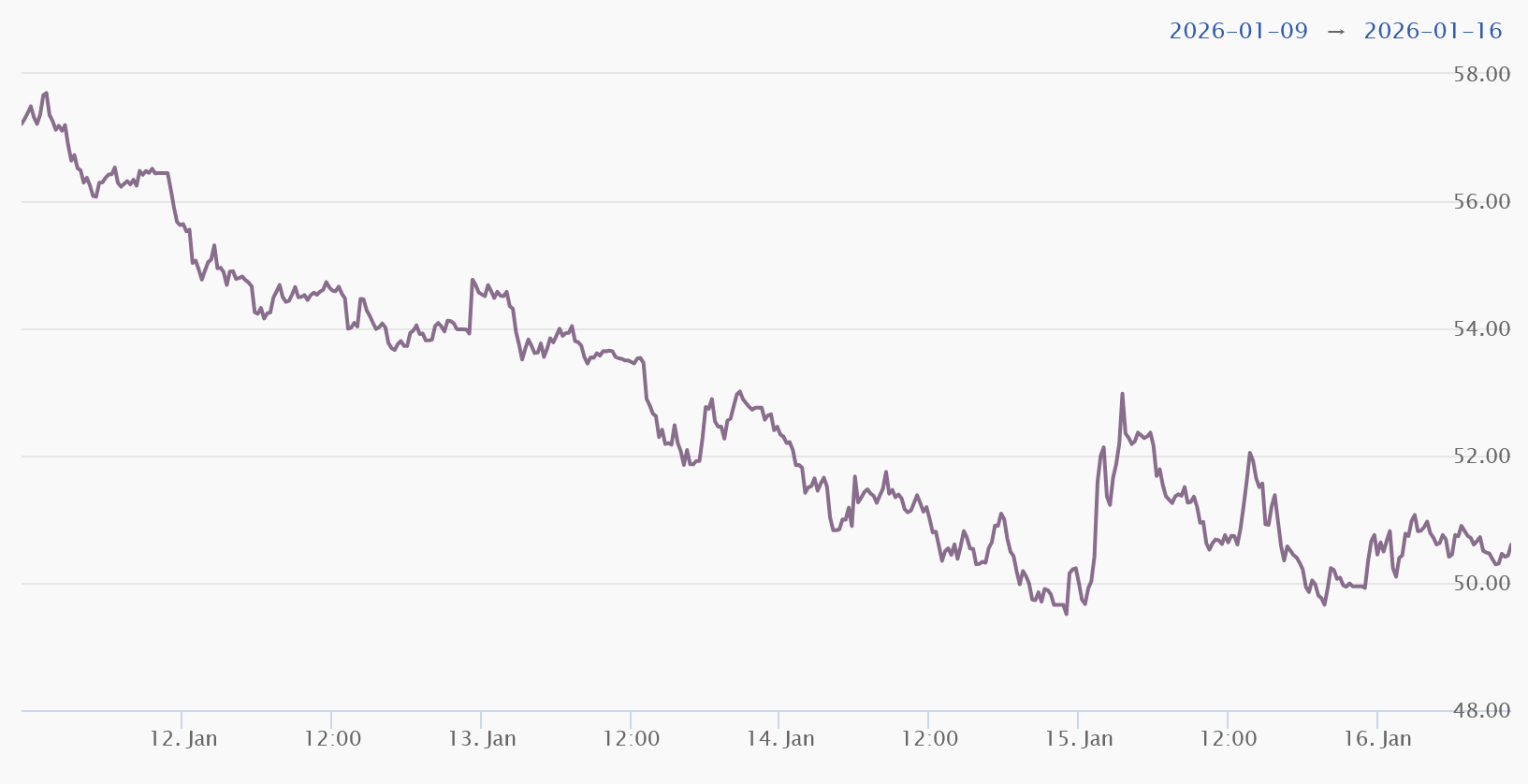
Gold & Silver:
Gold: Rose about 3.21% with a Week High: $4,685.94, Week Low: $4,462.75
Silver: Rose about 16.53% with a Week High: $95.30, Week Low: $77.80
5. Faith & Success
“Do not despise these small beginnings.”
I was reminded of this verse just this week, after a message I received from a Patreon member.
He told me he’d set a goal when he was 20 years old: to be a millionaire by 25.
Now he’s 23, which means he has about two years left, and suddenly he feels like he needs to move faster. Like he’s behind. Like time is slipping away (these are the words/language he used).
And I understand that feeling completely. But remember, your language creates your reality. It’s both biblical AND proven by science (for those who only ‘trust the science’)
That was one of the many secrets I discovered through the study of Quantum Linguistics (something that has fallen out of vogue now and is rarely spoken of) - oh how ironic. Ha. But maybe we’ll cover QL another day, it’s scattered throughout my courses anyway…
Back to my 23 year old young friend… When you attach a big vision to a specific timeline, it’s easy to start despising where you are now. The early progress feels slow. The wins feel small. The gap between where you are and where you want to be, feels uncomfortably wide.
But that’s exactly where this verse speaks wisdom.
Small beginnings aren’t a problem, they’re part of the journey, the process.
Every eventual big outcome starts small. Skills compound before money does. Judgment develops before scale arrives. Confidence is built long before results become visible. And most people miss all of this because they’re obsessed with the finish line instead of respecting the process.
Let me give any young people a piece of advice here from someone that grew up without money, and who thought about money everyday…
When you finally get the money, you say to yourself “Ohhhh, ermmm, now what?” - because there’s nothing there. At the end of the line, I mean. You think you’re going to get this massive payoff or sense of achievement, but actually, you just feel more comfortable and relaxed. Like when you finish a long endurance race, or pass an exam. It’s that sense of relief.
But then what? I (you), look back and say, “ohhh I get it now, the journey was the enjoyable part! And I rushed through it… darn.”
So here’s the danger:
If you despise the early stage, you’ll rush decisions, and you’ll skip foundations. You’ll chase shortcuts that look fast but cost you years later.
Progress that lasts is usually slower than we want, but faster than we realise in hindsight.
Two years might feel short when you’re looking at a big goal. But it’s a long time to build discipline, stack skills, increase income, sharpen judgment, and position yourself properly. What matters isn’t panic, it’s direction and consistency.
This is why when some people come to my Castle home, they can be so negative… they say things like: “oh this is going to take you forever to finish” or “Why on earth would you take on something like this?” Or even “Wow, can’t you hire more men so you can get it finished faster, and why are you so involved with every last decision and even helping out with tasks?”
You see, people who haven’t gone through the trenches just don’t get it. They are always looking for shortcuts. But I’m not. I will be both glad and sad when the castle is finished, because it’s all about the journey for me - the process, not the finish line.
I even made a 50+ part video series on Patreon showing the entire renovation process from when I first bought it to where we are today, and people LOVE that series. I get messages all the time asking when the next episode is coming out.
So don’t look down on the season you’re in, just because it doesn’t match the outcome you imagined yet. Treat it seriously. Show up fully. Do the work that doesn’t get applause.
Because the people who end up winning big are usually the ones who respected the small beginnings when no one else was watching.
And besides, one day, they look back and realise, it wasn’t slow at all… everything happens in it’s right time.
Until next time,
God Bless,
Neil,
p.s. why not share this newsletter with a friend?

Enjoying this Newsletter? Share with a Friend…
DISCLAIMER
This newsletter is 100% FREE & is designed to help your thinking, not direct it. These newsletters shall NOT be construed as tax, legal, or financial advice and may be outdated or inaccurate; all decisions made as a result of this information are yours alone.
Trading/Liability: Neil McCoy-Ward operates/trades under a private Ltd company within the Isle of Man.